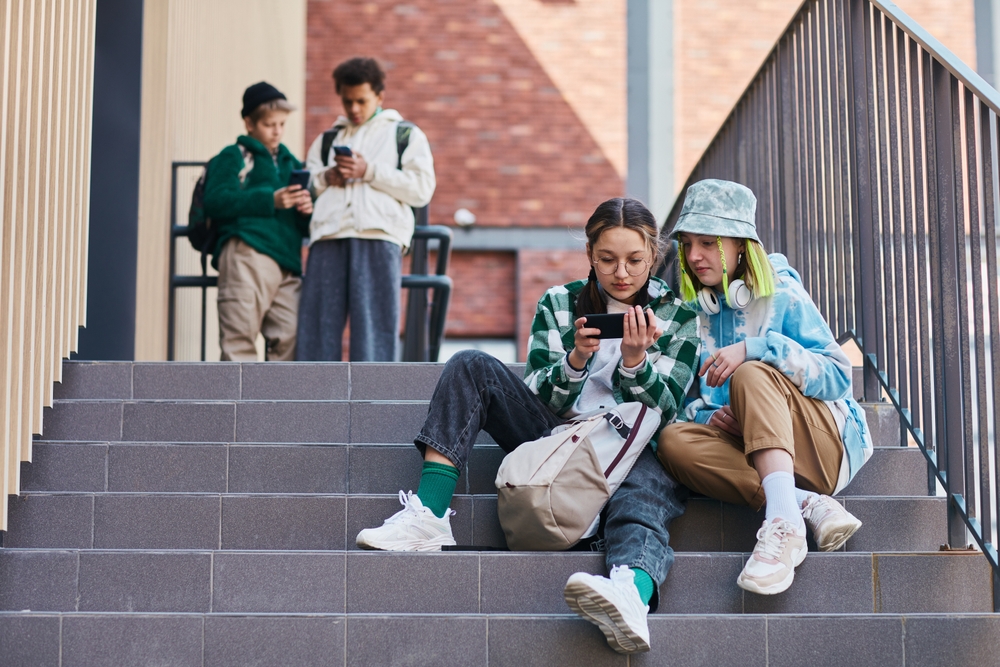
For most teens right now, apps like TikTok and Instagram are part of everyday life. It is normal to spend hours scrolling, watching short videos, and switching between apps without really thinking about it. But as screen time increases, so do concerns about attention span and whether social media is starting to blur the line between real ADHD and habits that just look like it.
Students were consistent in their self-reported screen time stats and feelings. Julia Atkins said she spends a few hours a day on TikTok and Instagram, sometimes more on weekends. She said it has definitely affected how she works.
“It’s like I’ll open my phone for one thing and then I just keep scrolling,” Atkins said. “Then I realize I didn’t do anything I was supposed to do. She said she has tried to fix this by setting limits for herself.
“I’ve deleted TikTok during the school week before,” Atkins said. “Or I’ll put my phone in another room when I’m doing homework, because if it’s next to me I’m going to check it.”
Even with those boundaries, she said it is still hard to stay focused for long periods of time. Ruby Grodner said she notices the same thing, especially in school.
“People are always on their phones in class,” Grodner said. “Even if the teacher is talking, people are still scrolling.” She said that the environment makes it harder to focus, even if you are trying to pay attention. “It’s distracting when everyone around you is distracted,” Grodner said.
Cate Zeller said she thinks this is starting to affect how people view ADHD.
“I feel like a lot of people think they have ADHD,” Zeller said. “Even if they’ve never actually been diagnosed.” When asked about focus, Zeller said she struggles with things that require sitting still for a long time.
“If we’re watching a movie in class, I can’t just sit there the whole time,” Zeller said. “I’ll go on my phone or start thinking about something else.” She also said that having something to do with her hands helps. “I focus better if I have something like a fidget,” Zeller said. “If I’m just sitting there doing nothing, I get distracted way faster.”
Across all the responses, one pattern kept coming up. Students described being easily distracted, having trouble finishing tasks, and needing constant stimulation. These are all traits commonly associated with ADHD, but many of the students who described them are not diagnosed.
Research from the National Institutes of Health suggests that social media can train the brain to expect constant stimulation, which can make slower tasks feel harder to focus on. Articles from ADDitude Magazine also explain that these platforms can increase impulsive behavior and shorten attention spans, especially in teens.
This connects to a larger discussion being raised in Nature about whether the rise in ADHD diagnoses could be influenced by environmental factors like technology use. Students seem to notice this shift in real time.
“I feel like my attention span is worse than it used to be,” Atkins said. “Like I can’t just sit and do one thing for a long time anymore.”
Grodner agreed and said it shows up most when trying to do schoolwork. “I’ll start homework and then check my phone like every few minutes,” Grodner said. “It makes everything take way longer.”
Zeller said the same thing, adding that it is not just school.
“Even when I’m watching something, I still feel like I need to check my phone,” Zeller said. “It’s like I can’t just focus on one thing.” This raises an important question. Are more teens actually developing ADHD, or are they developing habits that look like ADHD?
The difference matters. ADHD is a real condition that requires proper diagnosis, but constant exposure to fast, attention-grabbing content may be shaping how people focus on a daily basis. If that is the case, then some attention issues might come from behavior rather than biology.
At the same time, it is important not to dismiss ADHD completely. For many people, it is a real and serious condition. The challenge is figuring out when attention problems are caused by ADHD and when they are being influenced by an environment built around distraction.
In the end, social media is not going anywhere. But based on how students describe their own habits, it is clearly changing attention spans. As more teens struggle to focus, the question becomes less about how much time we spend on our phones and more about what that time is doing to how we think.