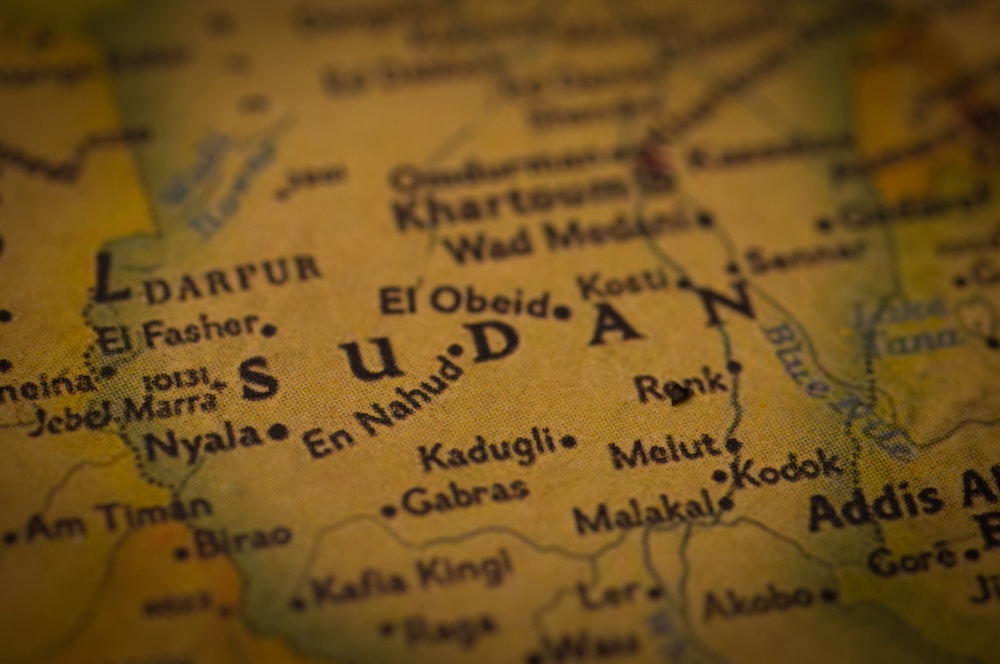
Sudan‘s ongoing civil war has triggered one of the world’s worst humanitarian crises. More than 24.6 million people are experiencing acute hunger of phase three and above on the Integrated Food Security Phase Classification, with “more than 24.6 million people…experiencing high levels of acute food insecurity,” according to the United Nations’ data. There are over 13 million displacements, 50% of the population is dependant on aid and hundreds of thousands facing violence, torture, public executions, kidnappings and sexual violence.
Sudan needs immediate help yet, the U.N. cannot generate nearly enough money to help the masses because the organization is severely underfunded, reaching only 39% of their needed funding. The urgency of the situation is further explained by the U.N Humanitarian and Emergency Relief Chief Martin Griffiths, who called Sudan “one of the worst humanitarian nightmares in recent history.”
If this funding issue is not resolved, the famine and violence will only worsen, and many will continue to struggle.Tthe U.N. warns that “without immediate…international support, famine risks [will spread] further…threatening the lives of millions.”
The conflict began on April 15, 2023, following a power struggle between Sudan’s military and paramilitary forces led by Abdel Fattah al-Buhran, head of the Sudanese Armed Forces (SAF), and Mohamed Hamdan Dagalo, head of Rapid Support Forces (RSF). The fighting has since plunged the country into widespread famine and violence, devastating millions.
“The most likely trajectory forward is towards [extreme] famine…and the possibility of a failed state,” U.S Special Envoy for Sudan Tom Perriello warned.
Once allies, the two powerful military groups fell into deep conflict as a result of strong disagreements in policies, command structure and force integration.
The SAF, a nationally recognized military, focused on central control and a reassertion of militant dominance. Their main aim was to control Sudan in all aspects: politically, economically, and militarily but in a different manner than to the RSF.
The RSF wanted complete control but was independent from the SAF, who wanted a unified and centralized government. The RSF wanted to rule through different central state institutions and personal networks.
With both military leaders refusing to come to an agreement on leadership, they started a battle for power. This war came with great destruction. Attacks destroyed cities and stripped millions of their resources, blocking aid for political ploys and dominance. It was a war only for the generals, but it ended up hurting millions of lives.
This war has fueled one of the most severe famines in decades. Aid organizations like the U.N. warned that if the situation continues, it could become one of the largest hunger crises in modern history, with officials noting that Sudan is already facing “one of the world’s most severe food crises.”
The famine started shortly after the war and was caused by both sides destroying wild stock harvest and stealing resources in their mission to win against one another. Looting and burning of farmland resulted in millions of unhoused Sudanese, who became reliant on food aid. However, both parties blocked aid to civilians in an attempt to restrict help to territories that belonged to the opposing side and to show who had the greatest political power and leverage.
The Sudanese began to starve, and this starvation of their own people was a message of obedience and control. According to Columbia Journalism Review, both parties wanted power, and they would do anything to obtain it, even if that meant starving children, families and individuals as a form of intimidation — “control over aid and access [was] being used as a tool of political leverage.”
There is now a spike in severe acute malnutrition with children, and mass displacement as millions cross the border into Chad, South Sudan and other bordering countries to escape the war. Furthermore, there is a severe spike in mortality rates (although numbers are not specifically known because of a lack of coverage.)
More deaths will continue as the famine rages on and aid is continually low. “We have nothing to eat but animal feed,” reported a displayed mother from El Fasher, describing the brutal conditions the people now face.
According to the U.N.‘s integrated food security phase classification (IPC), 24.6 million people are facing crisis level hunger or worse, as last recorded in May 2025. This can be sorted into three categories: 24.6 million in level 3 IPC, 8.1 million in level 4, and roughly 638,000 in level 5. Level 5 is the highest famine level, with U.N. data confirming “8.1 million in emergency conditions…and at least 638,000…in IPC Phase 5 (Catastrophe).”
Death and famine counts are still extremely undercounted as they take a while to record, and reporters are not let into the country. As a result, the true scale of the famine is unknown. An aid official, featured on CBS News in June 2024, spoke of the lack of global attention to the crisis warning, “The world is not watching us,” as the Sudanese people continue to suffer.
Yet somehow, under constant distress and danger, the Sudanese people still find a way to help and support each other in these hard times. People try to ration food, deliver aid to malnourished children and lead community-run hospitals now that hospitals have been shut down by the warring government.
Additionally, Sundanese have set up food banks and community kitchens so that they can ration food, ensuring equitable distribution of available supplies. They have started education centers and support groups to help combat the psychological trauma that they’ve faced.
These initiatives show the civilians’ strong resolve, but they cannot be alone in their fight for survival. As UNESCO highlights, journalists and civilians alike continue their work with “remarkable” silence despite the dire circumstances. This shows the Sudanese people’s determination.
The U.N. provides support for them consisting of food distribution, nutrition programs and money. Furthermore, the U.N. has also tried to organize ceasefires with military leaders from both sides in hopes of slowing the famine and violence. Such ceasefires have been quickly broken. The famine is worsening each day, and resources are rapidly dwindling because of the constant battles that disrupt food restoration.
Moreover, in an effort to use starvation as leverage, aid is being prevented by both parties. Such action is leading to underfunding and an overall economic collapse. Any effort to bring light to the horrors committed are obstructed, and several journalists who have written about the crisis have been killed. Others have fled in fear for their lives, leaving a gap in information.
This makes it extremely hard to know what is going on in the country, furthering the mysteries of mortality, famine and the true scale of the famine. Newsrooms have been looted and destroyed, and press freedom is non-existent, as they face constant threats in order to silence them.
“Journalists are harassed, intimidated, and even intentionally killed for simply doing their job,” said a reporter, whose identity has been kept anonymous, about the domestic reporting conditions.
Health and nutrition services, including water sanitation systems, are close to gone, and now masses are unvaccinated, sick, and dead. The displacement is in the millions as there have been well over three million refugees and nine million internally displaced within Sudan.
According to the U.N., “The conflict has displaced millions, with neighboring countries already facing severe resource constraints struggling to meet the needs of the growing refugee population.”
Over three million refugees are spreading to border countries, most of which are economically insecure, among the poorest nations in the world. Such countries are now receiving a great influx of Sudanese civilians. Since such countries cannot support the massive needs of these refugees, the conditions are creating mass economic wreckage, external to Sudan, and a cycle of poverty and destruction.
Meanwhile, the Sudanese people who stay in Sudan face fear of violence, abductions, sexual violence, forced separations, forced marriages, forced military recruitment and famine. Most shockingly, there is ethnic cleansing throughout certain regions of Sudan, used by the RSF to get rid of non-Arab communities. These constant threats and acts of violence and terror further dampen their spirits.
Not only are the murders, violence, starvation and sexual violence deeply under recorded, there is also a severe lack of media coverage, especially in the west. Millions are starving each day, and yet news coverage is sparse.
One humanitarian perspective notes: “No one’s paying attention,” highlighting the overall global neglect with which the crisis has been met.
“When I mentioned the war in Sudan to a class of peers…several said they were not aware that any such war was going on at all,” reported one San Diego high school paper. This is not a new occurrence since for centuries the violence going on in Africa has been a constant topic of neglect.
But it is now a modern age and things must change. The Sudanese War is not only affecting the country internally but is also destablizing bordering countries, deepening the poverty in already impoverished places and further inducing an economic instability and the gap between Africa and other continents.
90% of Sudan’s media outlets have been destroyed, according to UNESCO (United Nations Educational, Scientific and Cultural Organization) reports leaving the people almost completely unable to spread the atrocities the SAF and RSF are committing.
The time has come for news outlets in the West to step in and highlight the atrocities and needs that the Sudanese people cannot. We should strive to spread awareness and encourage others too as well. We can do this through sharing on social media, donations and learning the history of the country.