

“I’m tired of hearing about money, money, money, money, money. I just want to play the game, drink Pepsi, wear Reebok,” Shaquille O’Neal once famously said. But now, money is all we hear about in terms of sports, and what it takes to just “play the game” means something entirely different than it did before.
As different streaming platforms have battled over subscribers, prices of seats have increased, and technology has advanced, it has become harder and harder for people to watch their favorite team. And while sports have always brought people together, it seems now that they are more alienating than ever.
Sports are meant to be accessible. They are meant to be turned on during dinner time, after a long day of work, when all a person wants to do is see their favorite team take home another win. But now, by the time you actually find what channel your favorite team is being streamed on, your dinner will have gotten cold. “Games jump from one service to another with so little notice or apparent logic that even some of the biggest superfans struggle to track what’s available where,” wrote Joon Lee of The New York Times.
Organizations like the National Football League and Major League Baseball now have to compete with streaming services who capitalize on their audiences by forcing them to pay for a subscription. This creates a situation in which the wealthy can happily enjoy a shared community, but everyday people are excluded. “For everyone else, belonging is for sale,” as Lee put it.
Not only is it expensive to stream sports games on television, but it is expensive to attend them, too. Lee’s article states: “From 1999 to 2020, the average price of a seat across all sports rose roughly twice as fast as overall consumer prices.” Sports are meant to act as an escape from the chaos and anxiety of daily life, but these prices act as only a reminder of them.
When these prices rise, audiences decrease, making it so that people can no longer come together and celebrate a common interest, or escape the loneliness that may otherwise be a constant in their lives. And for the older generations, who grew up without streaming platforms and shockingly high ticket prices, who were surrounded only by local pride for their team and footage from a small black-and-white television, what about them? As the world of sports advances, does it mean we have to push everyone out who was there to see it advance in the first place?
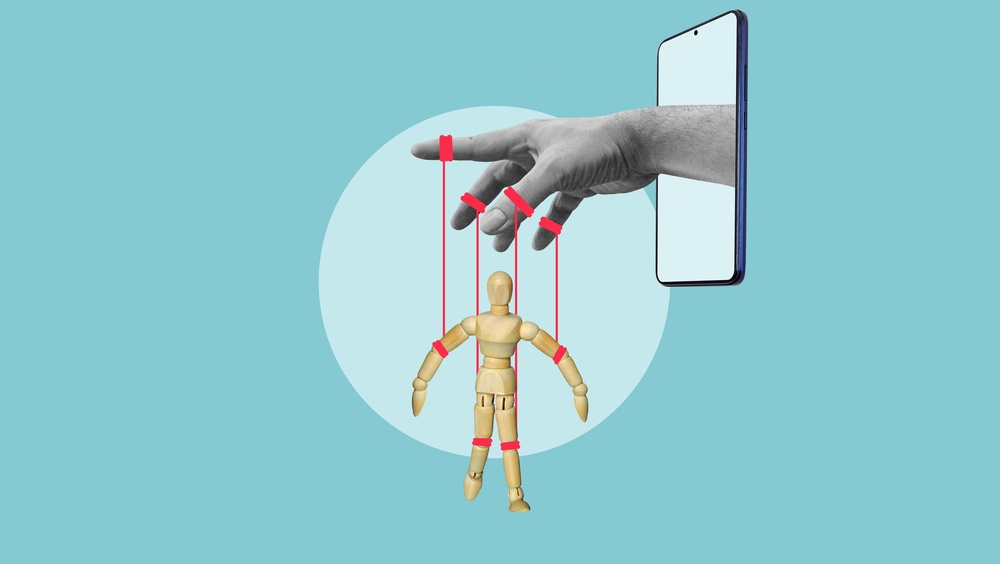
While sports streaming platforms rely on money, sports themselves have become more and more dependent on technology. Sports teams are using AI to provide strategy recommendations, while some referees and judges use it to help with their scoring. And of course, the ever-present social media is a space for fans to vent their frustrations about their respective teams, no matter how aggressive the conversations can get.
“I like [technology]…I think it’s good for things like medicine and helping people with some aspects of their jobs, but in the end, it’s destroying the earth and it’s making us dumber because we keep using it so much that it takes away from our ability to learn everything,” Alma Scheier, a sophomore at Montclair High School, said.
Sports are supposed to be driven by human instincts and motivation, but if technology replaces that, it becomes something that is only mechanical.
The uniting force of sports is seemingly slipping away from us. Sports have overcome differences in society like little else could, but now these differences only seem to be greater. If sports are put only at the mercy of money, rather than its fans, it will be yet another instance where shallowness has prevailed over purpose.











Lee Siegel • Feb 26, 2026 at 11:49 am
Brilliant!