There was no warning last October to the residents of Guangfu Township in Taiwan, when a super typhoon caused a barrier lake in the mountains to burst. More than 90 million tonnes of water was released, with the force of a tsunami, in what was enough to fill 36,000 Olympic-sized swimming pools. Water was as high as the second story of a building.
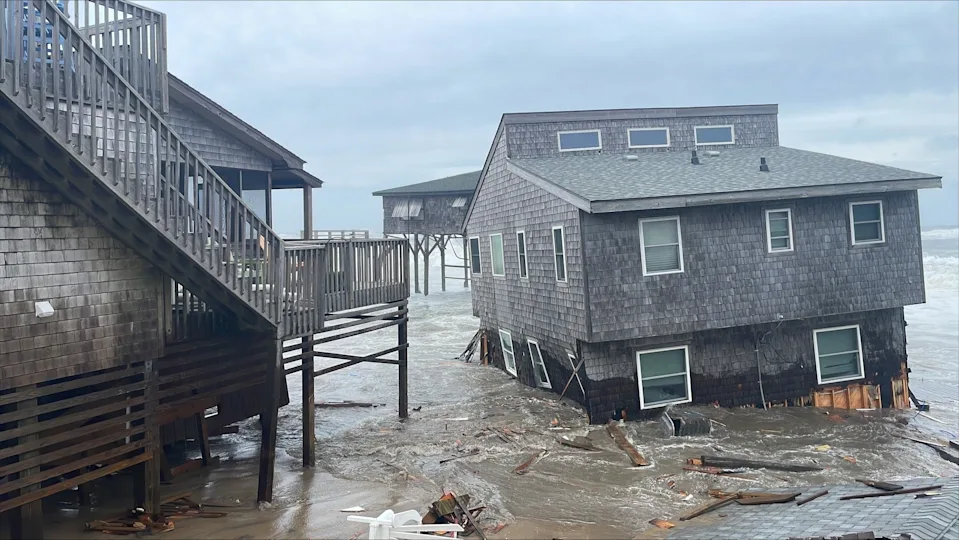
A month later, on the other side of the world, on North Carolina’s Outer Banks, powerful waves from Hurricanes Humberto and Imelda slammed the coastline, a combination of a storm surge and erosion. In the town of Buxton, five homes collapsed and were swept into the sea within 45 minutes. Witnesses described the destruction as sounding like “bombs going off” with windows cracking and wood pylons splitting.
At first these two natural hazards may seem unrelated but they are. By definition, natural hazards are extreme natural events like floods and earthquakes that result in destruction to people, properaty and the environment. Mostly, humans are to blame for worsening the effects of natural hazards by building in vulnerable high risk areas, as well as poorly managing the land. “We are expanding into areas that are known for natural disasters,” said Mr. Dalbo, Montclair High School Geoscience teacher. “The closer you are, the more you are facing that danger.”
That was the case for the events in Taiwan and North Carolina. In Taiwan, the disaster might have been prevented by using engineering techniques that we use in the United States. Building on coastlines is always a risk. Mr. Dalbo said it’s important to know that climate change wasn’t the single cause of these two natural hazards. No records were set. “These kinds of weather events happen,” he said.
That natural hazards are happening more frequently and with more severity can be linked to a warming climate. Scientists point to the rise in concentration of greenhouse gases, including Co2 in the atmosphere as a big reason we are seeing more destructive weather events. The more greenhouse gases the warmer the planet gets, enhancing the effects of climate change. The burning of fossil fuels also causes oceans to warm and rise, leading to severe weather patterns.
“Weather is going to dictate how many storms form and where they go,” said Mr. Dalbo. “But climate change is going to impact the magnitude or severity of the storms.” He says the reasoning behind this is straightforward: the warmer our oceans are, the more energy there is for extreme events like hurricanes. Warmer air also holds more moisture, producing heavier rainfall. Sea water expanding and ice melting further contribute to rising sea levels.
Now, he says, is the time to act to combat global warming. Students at Montclair High School can do their part. “Reducing carbon footprint is key,’ said Mr. Dalbo. “There are certain things we all can do.” We can turn off lights, take shorter showers and minimize our use of plastic. The biggest impact comes from reducing plane trips and maximizing use of public transportation. Switching to hybrid and electric vehicles is another way to care for the earth. The truth is individual action won’t be enough. As Mr. Dalbo is clear to point out, “You need a mass organization of agreement to really make an impact.”